“When should I bring my child to the dentist for the first time?” The official recommendation from the American Dental Association and the American Academy of Pediatric Dentistry is simple: by their first birthday, or within six months of getting their first tooth, whichever comes first.
That feels early for a lot of parents. Their child has just a few tiny teeth. They’re still figuring out how to eat solid food. The idea of sitting in a dental chair seems like a lot to ask of a one-year-old. But waiting until age three or four is often too late. By then, small problems can become bigger ones. And some children show signs that they need to see a dentist even earlier than the general guideline.
So how do you know if your child should come in sooner rather than later? Here are five signs to watch for.
1. White Spots on the Teeth
Have you noticed chalky white spots on your child’s front teeth, especially near the gumline? That’s not just something that will go away. It’s often an early sign of tooth decay.
The white spots mean the enamel has started to weaken from acid exposure. At this stage, the damage hasn’t created a cavity yet. With the right care and guidance, we can often stop the decay from progressing. But if you wait, those white spots can turn into brown spots, then into actual holes.
2. Trouble Chewing or Eating
If your toddler seems to struggle with chewing, favors one side of their mouth, or avoids certain foods they used to enjoy, that’s worth looking into.
Sometimes it’s just a phase or typical picky eating. But other times, it can mean there’s discomfort from a cavity, an erupting tooth that’s causing pain, or even an issue with how their teeth are coming together. A quick exam can give you peace of mind or catch something that needs attention.
3, Thumb Sucking That Won’t Quit
Most kids suck their thumbs or fingers at some point. It’s comforting and completely normal in infancy and early toddlerhood.
But if your child is still thumb sucking past age four, it can start to affect how their teeth and jaws are developing. Persistent thumb sucking can push the upper teeth forward and create an open bite, where the front teeth don’t meet when the mouth is closed.
We’re not here to shame anyone about it. But we can talk with you about gentle ways to help your child stop, and we can monitor whether it’s causing any changes to their developing smile.
4. You Notice Crowding or Gaps That Seem Unusual
Children’s teeth shift as they grow. Some gaps and movement are completely normal. But if you notice teeth coming in crooked, overlapping, or noticeably out of alignment, it’s worth having an exam.
Early evaluation doesn’t always mean early treatment. Sometimes we just watch and wait. Other times, early intervention can guide growth and prevent more complex orthodontic problems down the road. It’s always better to know what’s happening than to wonder.
5. Your Child Has Special Health Needs or Developmental Concerns
Some children are at higher risk for dental problems due to other health conditions. If your child has a cleft lip or palate, certain genetic conditions, or any ongoing medical treatment that affects their mouth or immune system, we’d want to see them early.
The same goes for children with severe reflux, which can expose teeth to acid, or children who take medication that causes dry mouth. A dentist who’s aware of the full picture can help you manage their oral health alongside everything else.
What an Early Visit Actually Looks Like
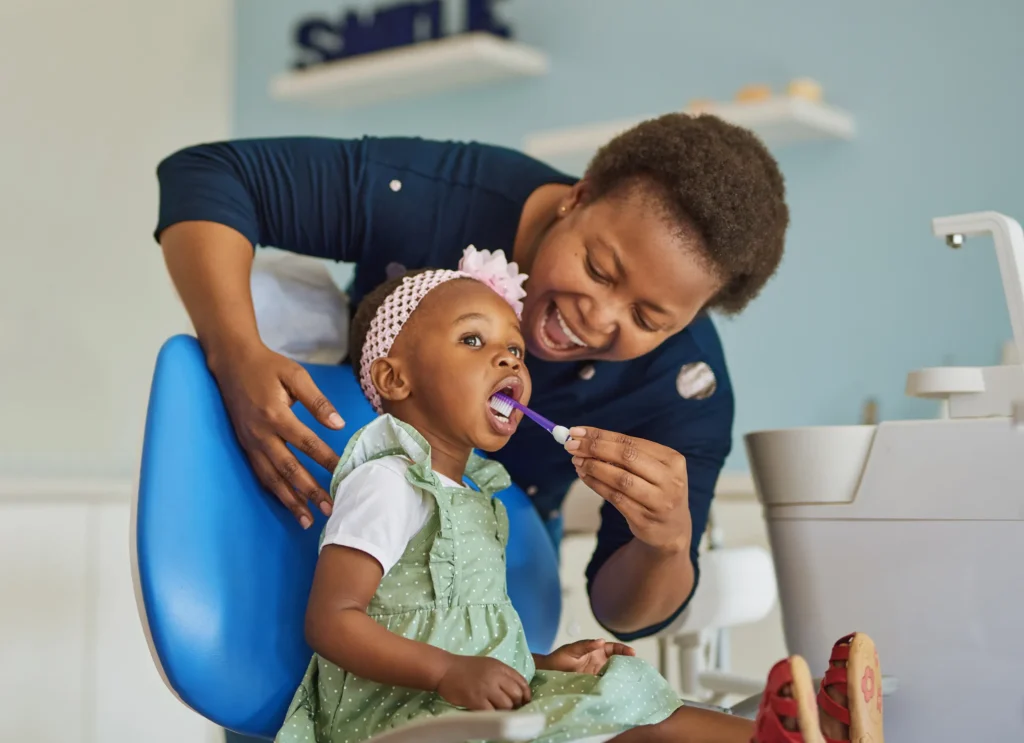
If you’re worried about how your toddler will handle their first dental visit, we get it. That’s why we make it as easy and gentle as possible.
For little ones, the first visit is usually short and sweet. We might do what’s called a “knee-to-knee” exam, where you and Dr. Mattson, Dr. Hellickson, or Dr. Daraee sit facing each other with your child on your lap. We’ll take a quick peek at their teeth, talk about brushing and eating habits, and answer any questions you have.
It’s more about building comfort and catching concerns early than about doing any significant treatment.
You Don’t Have to Wait for Problems to Start
The earlier your child sees a dentist, the more likely we are to catch small issues before they become big ones. And the more familiar your child becomes with the dental office, the less anxiety they’ll carry into adulthood.
At Mattson Hellickson Dental, we’ve been caring for Beaverton families for years. We’re not just a dental office; we’re part of this community. And we’d love to meet your little one and help them start their journey toward a lifetime of healthy smiles.
New patients of all ages are always welcome. Call our Beaverton office at 503-308-7664 to schedule your child’s first visit.